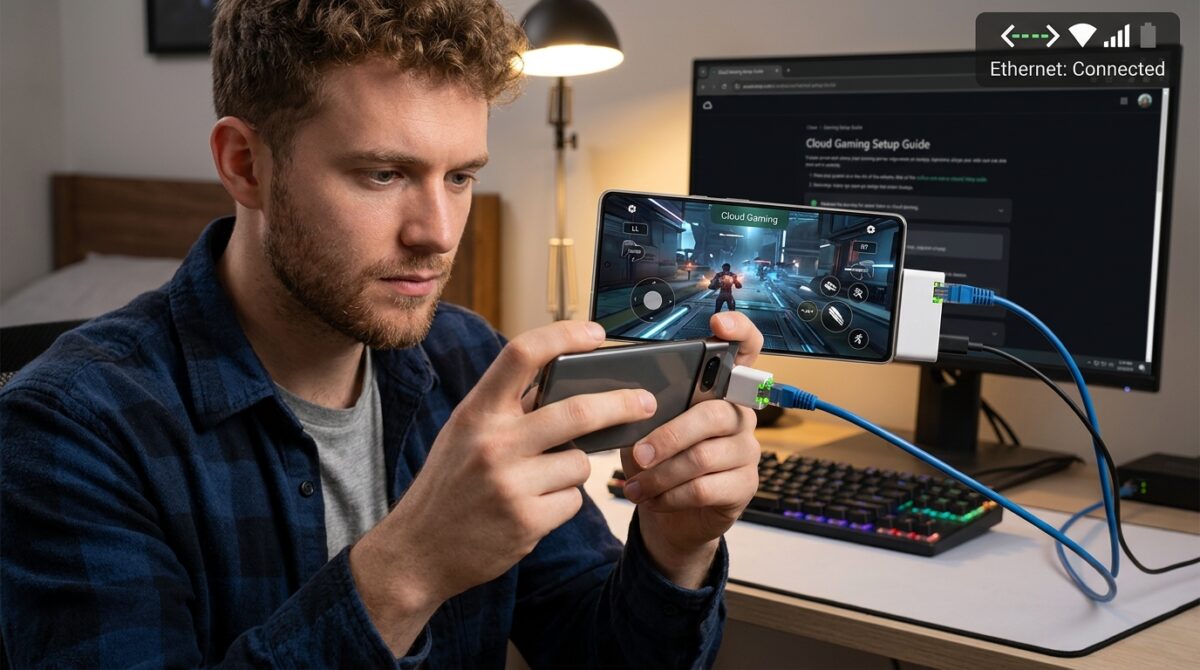
How to Force an Android Phone to Use Ethernet via a USB-C Hub for Stable Cloud Gaming
Cloud gaming on Android smartphones is becoming more popular because it provides console-quality experiences on mobile hardware by eliminating the need to depend on the processing capacity of the device’s local device. The performance of cloud gaming services, on the other hand, is greatly reliant on the stability of the network, the bandwidth available, and the low latency. Stuttering, latency, or visual abnormalities may occur during gaming if you use Wi-Fi, despite the fact that it is handy. Wi-Fi may also be susceptible to interference, signal dropouts, or changing rates. The use of a USB-C hub to establish a direct connection between an Android phone and an Ethernet network offers a dependable solution that guarantees continuous throughput and decreased latency. To achieve steady and responsive gameplay, it is vital for users to have a solid grasp of how to install Ethernet connections, troubleshoot device restrictions, and optimize settings. This is especially true for users who are looking for continuous gaming sessions.
Acquiring Knowledge of the Ethernet Support Present on Android Devices
It is essential to check compatibility before trying to set up a wired configuration since not all Android devices have the capability to handle Ethernet connections by default. It is possible for many recent smartphones equipped with USB-C ports to interact with Ethernet adapters or USB-C hubs that are equipped with a network port; however, this requires the presence of appropriate driver support. Android versions 9.0 and later normally offer built-in support for USB Ethernet adapters; however, some devices may need firmware upgrades or special hub configurations in order to function properly. By being aware of the capabilities and limits of their devices, users may ensure that they choose gear that is suitable with their needs and avoid experiencing connection difficulties while trying to play cloud games via Ethernet.
A Guide to Choosing the Appropriate USB-C Hub or Adapter
The selection of an appropriate USB-C hub is very necessary in order to enable a reliable Ethernet connection. It is necessary for the hub to facilitate the use of USB Ethernet adapters or to include an RJ45 connector into its design. Additionally, it must have enough power supply in order to avoid performance throttling. It is possible for some hubs to have numerous ports, such as HDMI, USB-A, and Ethernet, which enables the simultaneous connecting of peripherals without causing the device to become overloaded. When it comes to cloud gaming, hubs that enable gigabit Ethernet are suggested since, in comparison to 100 Mbps adapters, they provide more bandwidth and reduced latency. In order to ensure a smooth installation and dependable functioning, it is vital to evaluate whether or not the hub is compatible with the Android phone type.
Customizing the Ethernet Settings on an Android Device
Android will normally immediately identify the Ethernet connection after the hub has been attached; however, extra setup may be required in order to get optimal performance. In order to verify that the device is using a physical connection rather than a Wi-Fi connection, users may go to the “Network & Internet” settings, discover the Ethernet option, and then travel to the Ethernet option. The manual setup of IP addresses, DNS servers, or proxy settings is a feature that is available on some devices. This feature may further improve connection stability and minimize latency. It is very necessary, in order to guarantee ongoing cloud gaming, to make certain that the Ethernet interface is both active and prioritized over wireless networks.
Ensuring Compatibility Between Cloud Gaming Applications
As a result of the fact that not all cloud gaming applications automatically identify Ethernet connections, it is essential to check that the service being used is specifically setup to make use of the wired network. A restart or a network refresh can be necessary for some applications in order to identify the Ethernet connection. Within the application, users should keep an eye on the network statistics, searching for continuous bandwidth and relatively low packet loss. It is possible for gamers to gain a more fluid gaming experience and steer clear of the typical problems that are linked with Wi-Fi unpredictability, such as frame drops or input latency, if they determine that the program is using the wired connection.
Enhancing the Performance of the Network to Achieve Low Latency
The optimization of network performance is a crucial component of cloud gaming, in addition to the establishment of a physical connection. Users should make certain that the Ethernet cable is of a good quality, steer clear of cables that are too lengthy or broken, and verify that the router or switch supports gigabit speeds. For the purpose of preventing congestion, it is possible to disable superfluous background processes or programs that use a lot of network resources on the phone. Additionally, setting the router for quality of service (QoS) might prioritize gaming traffic. A well-executed optimization strategy will decrease latency, cut down on buffering, and guarantee that gaming will continue to be responsive and visually smooth.
Identifying and Resolving Common Problems
Users may have difficulties, such as the device failing to identify the Ethernet adapter, inconsistent connection, or the phone defaulting to Wi-Fi, even when they have hardware that is compatible with the device under consideration. The most common troubleshooting techniques include of reconnecting the hub, resetting the device, trying with an alternative adaptor or cable, and making sure that the Android operating system is up to current. It is possible that some customers may additionally need to alter the settings for their USB setup, such as turning on “OTG” or changing the data transmission modes. To guarantee that the wired connection continues to function dependably over lengthy gaming sessions, it is necessary to systematically solve these concerns.
A Few More Suggestions for a Reliable Cloud Gaming Configuration
Users should combine a wired Ethernet connection with additional optimizations, such as utilizing a display with a high refresh rate, activating game mode features on the phone, and dismissing programs that are running in the background, in order to have the best possible experience. Maintaining a consistent power source, whether via the hub or an external charger, helps to eliminate performance dips that may occur during intense sessions. Real-time monitoring of latency, jitter, and bandwidth utilization is another option for users to consider when it comes to network monitoring tools. In order to get the most dependable and responsive environment for cloud gaming on Android, it is necessary to combine these tactics with a direct Ethernet connection. This combination makes it possible to play games of a high quality even when the Wi-Fi connection is unreliable or crowded.
Enhancing Both Performance and Pleasure to Maximize
By compelling an Android phone to make use of Ethernet over a USB-C hub, customers are able to have access to a reliable and low-latency network that facilitates improved performance in cloud gaming. The elimination of interruptions, the reduction of lag, and the preservation of fluid visuals are all dependent on the careful selection of hardware that is compatible with the system, the correct setup of Ethernet settings, and proactive network optimization. It is possible for Android users to experience the advantages of console-quality gaming on a mobile device, free from the inconsistencies of wireless networks, while still taking full use of high-speed cable connections. This is possible with the appropriate configuration.