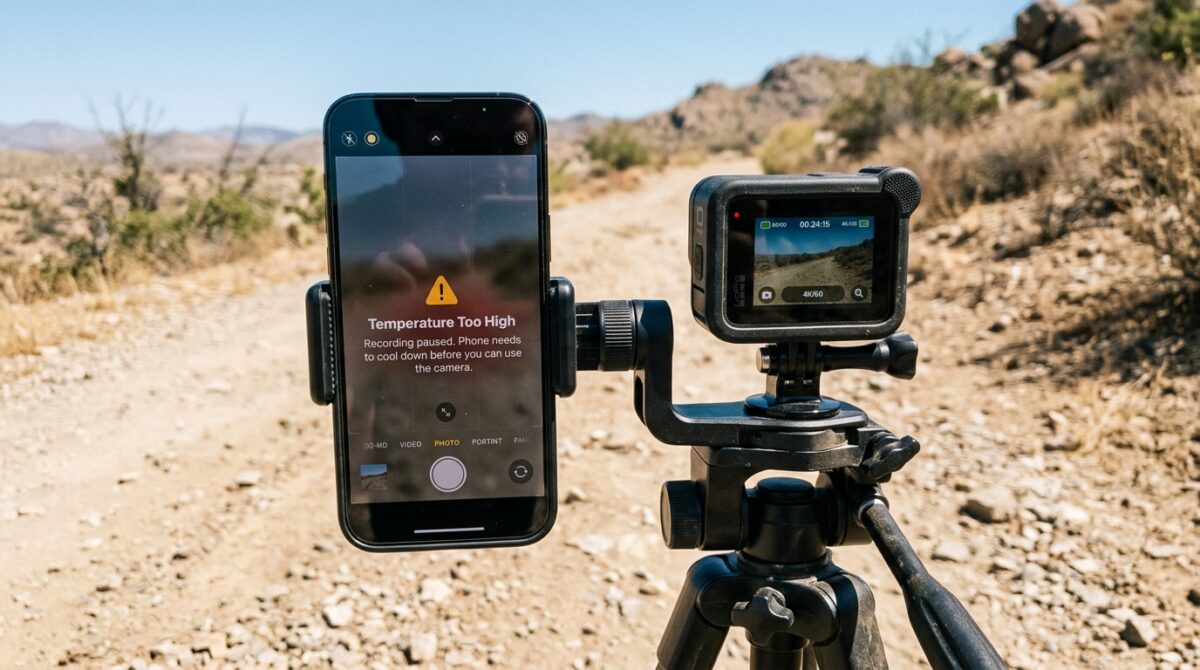
Dedicated Action Cameras vs Flagship Smartphones: Thermal Shutoff Limits During Continuous 4K Recording
When it comes to specialized action cameras as well as premium smartphones, the capability to shoot high-quality 4K video has become a common feature. The use of tiny devices that are capable of shooting precise video without the need to carry large equipment is becoming more important for content producers, travelers, vloggers, sports, and professionals at all levels. Although the quality of the picture is often the focus of attention, the performance of the recording over extended periods of time is also quite significant for many users. Due to the fact that CPUs, image sensors, memory systems, and stabilization technologies are required to run at high workloads for long periods of time, continuous 4K recording creates a significant amount of heat. It is possible for devices to automatically lower their performance or completely stop recording when temperatures surpass the acceptable working levels. By gaining an understanding of the ways in which specialized action cameras and flagship smartphones deal with thermal restrictions, one may get useful information into which platform performs better during extended 4K recording sessions.
Reasons Why Recording in 4K Causes a Significant Increase in Temperature
When compared to ordinary high-definition capture, recording 4K video takes a much higher amount of computing power. Devices of the modern day are required to continually gather picture data from sensors with a high resolution, analyze color information, apply algorithms for noise reduction, stabilize footage, compress video files, and write enormous volumes of data to storage capacity. Each of these processes requires the use of electrical power and results in the production of heat. If you activate sophisticated features like high frame rates, high dynamic range (HDR) processing, or electronic picture stabilization, the burden will increase even more. The management of heat buildup constitutes one of the most essential technical difficulties in current video-capable electronics. This is due to the fact that tiny devices have limited room for cooling gear.
Knowing the Different Types of Thermal Protection Systems
Thermal protection systems are being used by manufacturers in order to avoid internal components from being damaged by excessive heat. The temperatures throughout the device are continually monitored by these systems, which take action when crucial thresholds are getting close to being reached. Thermal management may entail slowing processing speeds, restricting recording capabilities, dimming displays, or even ceasing video capture. This is dependent on the architecture of the device. Long-term dependability and battery safety are both protected by thermal shutdown devices; yet, these measures have the potential to halt recording at inopportune times. In many cases, the capability of a device to withstand intense recording workloads for an extended period of time before thermal safeguards are required is directly proportional to the efficacy of its cooling architecture.
How Popular Smartphones Handle Extreme Temperatures
Smartphones that are considered to be flagship models are built to execute a broad range of functions, such as communication, gaming, photography, navigation, and productivity apps. Physical design limits are a constraint on thermal management since it is necessary to maintain a balance between various functions inside an exceedingly thin shell. Graphite layers, vapor chambers, thermal pads, and complex software controls are some of the components that modern cellphones use in order to effectively disperse heat. Nevertheless, throughout the process of recording in 4K, a number of heat-generating systems are operating concurrently. These systems include the camera sensor, image processor, display, storage controller, and battery management circuitry. When recording for a lengthy period of time, the compact shape restricts ventilation, which makes it difficult to prevent heat buildup.
The Benefits of Dedicated Action Cameras in Terms of Their Structure
The primary objective of action cameras is to record video, as opposed to being able to function as multifunctional computer devices. The underlying architecture of these devices is geared around recording performance, which enables designers to concentrate thermal resources more precisely toward prolonged video workloads. A great number of action cameras make use of cooling structures that are not only small but also extremely efficient. These structures are primarily concerned with the management of heat production by image components. Thermal endurance is often given a higher importance in the design process for these devices than it is for smartphones. This is due to the fact that these devices are anticipated to record continually during activities such as cycling, hiking, motorsports, and outdoor adventures. There are a few benefits that come along with this specialty while recording for lengthy periods of time.
conditions of the environment and the length of time spent recording
A significant factor in affecting thermal performance is the environment in which the system is located. It does not matter what kind of equipment you are using; recording in areas with inadequate ventilation, direct sunshine, or hot weather will cause the temperature to rise more quickly. Due to the fact that their huge screens create extra heat while simultaneously collecting solar radiation, smartphones are especially susceptible to this specific vulnerability. When installed in protective housings that limit airflow, action cameras are particularly susceptible to overheating under harsh temperatures. This is especially true when the housings are tight. On the other hand, recording in colder conditions often enables both sorts of equipment to continue operating for a much longer period of time before reaching their thermal limitations. Therefore, the temperature of the environment is one of the most significant aspects that determines the length of time that a recording takes in the actual world.
Workloads Associated with Image Stabilization and Processing
The use of advanced stabilizing technology is a significant contributor to thermal stress. A significant number of smartphones make use of complex computational stabilizing technologies. These systems do real-time analysis of visual data while concurrently making adjustments. These computations take a significant amount of computing power and result in an increase in the amount of heat produced during recording. Electronic stabilization is also used by action cameras; however, a significant number of these cameras are developed with specialized hardware and software improvements that may increase their efficiency when subjected to persistent workloads. It is possible for the cumulative effect of algorithms for picture enhancement, compression, and stabilization to have a considerable impact on the rate at which a device hits thermal protection criteria.
Batteries’ heat and the density of their internal components
A further important issue that has an effect on thermal performance is the behavior of the battery. Due to the fact that both processing components and image sensors need constant power, recording 4K video exerts significant demands on battery systems. The interior layouts of smartphones are incredibly thick, and they include huge batteries along with a multitude of other components. When batteries begin to drain, they add more heat to an environment that is already experiencing a high level of thermal stress. Despite the fact that action cameras often have smaller batteries, their internal architecture is frequently designed with recording efficiency in mind. The manner in which heat flows throughout the apparatus may have a significant bearing on the amount of time that can pass before thermal intervention takes place.
Performance of Continuous Recording in Real-World Conditions
In real-world testing situations, specialized action cameras often exhibit higher levels of consistency throughout extended sessions of 4K filming. Because of their particular designs, they are able to continue to function normally even when subjected to workloads that may cause temperature alerts on some varieties of cellphones. Over the last several years, flagship smartphones have seen considerable advancements, and they are now capable of recording for impressively long periods of time under ideal settings. However, due to the fact that video recording shares thermal resources with a large number of other device operations, they continue to be more sensitive to increased heat buildup. Although there is a significant amount of variation in recording length across models, action cameras often continue to be advantageous when the primary purpose is to catch anything without interruption.
Striking a Balance Between Video Quality and Capability
In many cases, flagship smartphones are able to produce great picture quality by using complex processing pipelines and powerful computational photography. When it comes to the production of short clips and normal material, they usually provide results that are comparable to those of specialist cameras. Thermal reliability, on the other hand, becomes a more crucial factor during extended events, interviews, sporting activities, and situations that need continuous recording environments. There is a possibility that action cameras may forego some computational advances in order to ensure steady operation over lengthy periods of time. As a result, users are required to strike a compromise between the level of image processing complexity and the continuous recording endurance when picking the device that is best suitable for their requirements.
Choosing the Most Appropriate Device for Recording Extended 4K Video
In general, dedicated action cameras have an edge over other types of cameras when it comes to thermal shutdown limits during continuous 4K recording. This is because dedicated action cameras have better thermal management systems and particular design goals. The fact that they are designed exclusively for continuous video capturing makes them more capable of withstanding longer workloads than smartphones that are designed for many purposes. The gap between flagship smartphones and their competitors continues to decrease as a result of advancements in cooling technology and more efficiency in CPUs; yet, the compact all-in-one design of flagship smartphones continues to offer thermal issues during extended recording sessions. When it comes to customers who routinely record lengthy events or who want utmost dependability in challenging situations, specialized action cameras continue to be the superior option. Smartphones, on the other hand, provide users with an exceptional degree of adaptability and convenience, particularly for those users whose recording sessions are shorter and use less thermal energy.