Smart Thermostat Placement Errors: How Sun Glare and Drafts Cause False Readings and Wasted Energy
Because they enable users to automate heating and cooling, monitor interior temperatures, and maximize comfort, smart thermostats have emerged as an essential component of contemporary home energy management that has grown more popular. The choices on when the heating or cooling systems should be activated are made by these devices based on the temperature sensors that are embedded into them. When put in the incorrect position, however, even the most sophisticated smart thermostat might generate findings that are not accurate. There are a number of factors that may lead to inaccurate temperature readings, which in turn might result in wasteful system operation. These factors include direct sunshine, air breezes, neighboring heat sources, and poor location choices. It is possible for a thermostat to run heating or cooling cycles for longer than necessary if it performs an inaccurate sense of the environment. This results in an increase in energy consumption and a decrease in comfort. It is necessary to have a solid understanding of the correct location of the thermostat in order to achieve precise temperature control and effective energy use.
Temperature Accuracy Measured by Intelligent Thermostats
In order to decide whether the house needs to be heated or cooled, smart thermostats need the usage of internal sensors to measure the temperature of the air that is around the thermostat. The heating, ventilation, and air conditioning system is able to keep the living area at a pleasant temperature because these sensors are intended to mimic the typical circumstances of the living space. It is important to note that the thermostat only monitors the air in the local vicinity of its placement. The thermostat may make erroneous conclusions if the temperature of the surrounding region is higher or lower than the temperature of the remainder of the structure. In order to achieve precise temperature control, it is essential to position the device in such a way that its sensor is able to collect an accurate depiction of the environment inside the room.
The Issue That Occurs When Direct Sunlight Shines On Something
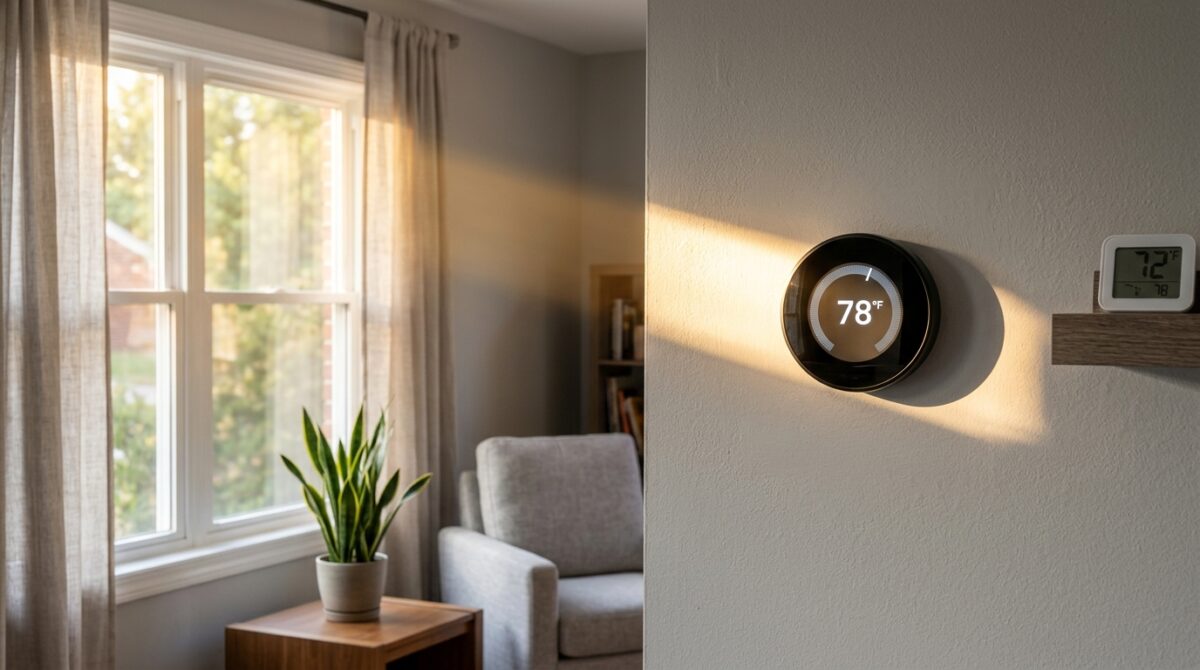
Glare from the sun is one of the most prominent factors that might lead to erroneous readings from a thermostat. There is a possibility that the surface and internal components of the thermostat housing will collect heat that does not correspond to the actual temperature of the room when sunlight strikes the housing directly. The sensor can pick up on this extra warmth and determine that the temperature across the whole room is higher than it really is. Because of this, the air conditioning system may have to operate for a longer period of time during the summer months in order to correct for a misleading heat measurement. The end effect is an increase in energy use without a discernible and noticeable gain in comfort.
How the Positioning of Windows Can Lead to Inaccurate Readings
The installation of a smart thermostat in close proximity to windows might result in a number of complications due to the fact that windows induce temperature fluctuations that are not representative of the rest of the house. If you position a thermostat next to a window that receives a lot of sunlight, it is possible that the temperature may fluctuate quickly during the day. As a result of heat loss and air leakage, windows may also create cooler zones during the months when temperatures are lower. As a result of these localized impacts, the thermostat may get confused, which may result in unneeded modifications to the heating or cooling system. In most cases, a more central site offers a more trustworthy assessment of the overall conditions within the building.
Drafts and interference with the passage of air
Due to the fact that the sensor monitors the air that is traveling around it, air drafts may have a major impact on the accuracy of the thermostat. When put in close proximity to doors, corridors with heavy airflow, vents, or other locations with frequent air movement, a thermostat has the potential to detect circumstances that are not the same as the actual temperature of the room. The thermostat may, for instance, be tricked to assume that the whole house is colder than it really is if cold air is allowed to enter via a door that is not properly sealed. After then, the heating system could run for a longer period of time in order to fix an issue that is only present in the vicinity of the sensor.
Reasons Why Positioning It Close to HVAC Vents Is a Mistake
Some homeowners choose to put thermostats in close proximity to air vents because they believe that these locations are the most reasonable places to monitor variations in temperature. On the other hand, this may result in false readings since the thermostat may measure conditioned air straight from the HVAC system rather than the atmosphere of the room. It is possible for the thermostat to perceive a lower temperature if cold air is flowing directly over the sensor. This may cause the system to stop cooling too early. Likewise, the movement of warm air may provide erroneous estimates of temperature. The thermostat should not measure the output of the heating or cooling equipment; rather, it should measure the room itself.
The Effects of Heat Sources in the Neighborhood
Additionally, heat-producing devices have the potential to skew the readings on the thermostat. A variety of electrical devices, including TVs, lights, kitchen appliances, laptops, and other electronic devices, produce heat that may have an effect on sensors in the immediate vicinity. In the long run, even a little temperature variation surrounding the thermostat may have an impact on the choices made about HVAC. It is possible that the gadget will limit the amount of heating operation if it perceives that a room is warmer than it really is. In the event that it senses artificial cooling from another source, it may raise the activity level of the system without any justification. When it comes to maintaining more precise temperature monitoring, avoiding heat sources is very helpful.
Taking into consideration the wall’s height and location
There is also a correlation between the actual location of the thermostat on the wall and the accuracy of the measurements. Changes in temperature are a natural phenomenon that takes place at various heights due to the fact that warmer air rises and colder air descends. Putting in a thermostat that is either too high or too low might result in readings that do not correspond to the usual comfort zone of the people living in the space. Placement on an inside wall at a modest height and in a location where airflow is consistent is beneficial for the majority of houses. This makes it possible for the sensor to more accurately record circumstances that are closer to the average temperature that individuals in the room feel.
How erroneous readings contribute to the waste of energy
A response from the heating, ventilation, and air conditioning system is based on wrong circumstances when a thermostat gets faulty information. It is possible that this may result in prolonged heating cycles, cooling that is not required, or frequent changes that generate energy waste. When the rest of the house is at a pleasant temperature, a thermostat that is located in direct sunlight may cause the temperature to drop. A gadget that is susceptible to drafts may cause a rise in temperature, even if the actual temperature within the building is satisfactory. These repetitive adjustments may, over time, lead to an increase in the use of fuel or energy, while simultaneously lowering the efficiency gains that smart automation provides.
Making Use of Intelligent Functions to Enhance Accuracy
Learning algorithms, scheduling features, remote sensors, and environmental changes are all components that are included in many current smart thermostats. These elements are aimed to increase performance. It is important to note that these technologies are not capable of totally compensating for poor physical positioning. The arrangement of the core thermostat is still important, despite the fact that remote temperature sensors might be helpful since they enable the system to assess conditions in other rooms. In order to produce a temperature control system that is more dependable, it is necessary to combine appropriate installation with intelligent features. A solid basis for efficient automation is the collection of accurate data.
Making an Effective Configuration for the Thermostat
It is only when it gets correct temperature information that a smart thermostat is able to manage energy in an effective manner. In order to avoid incorrect readings, which might result in wasted energy, it is important to avoid direct sunlight, drafts, vents, and equipment that produce heat. Proper placement on an interior wall that has consistent airflow offers a more accurate picture of the conditions that really exist inside the house. Intelligent features have the potential to enhance control, but they function most effectively when the supporting sensor data is trustworthy. Increasing comfort, minimizing needless HVAC activity, and making the most of the energy-saving potential of smart temperature control are all things that homeowners may do by first recognizing and then resolving placement errors.