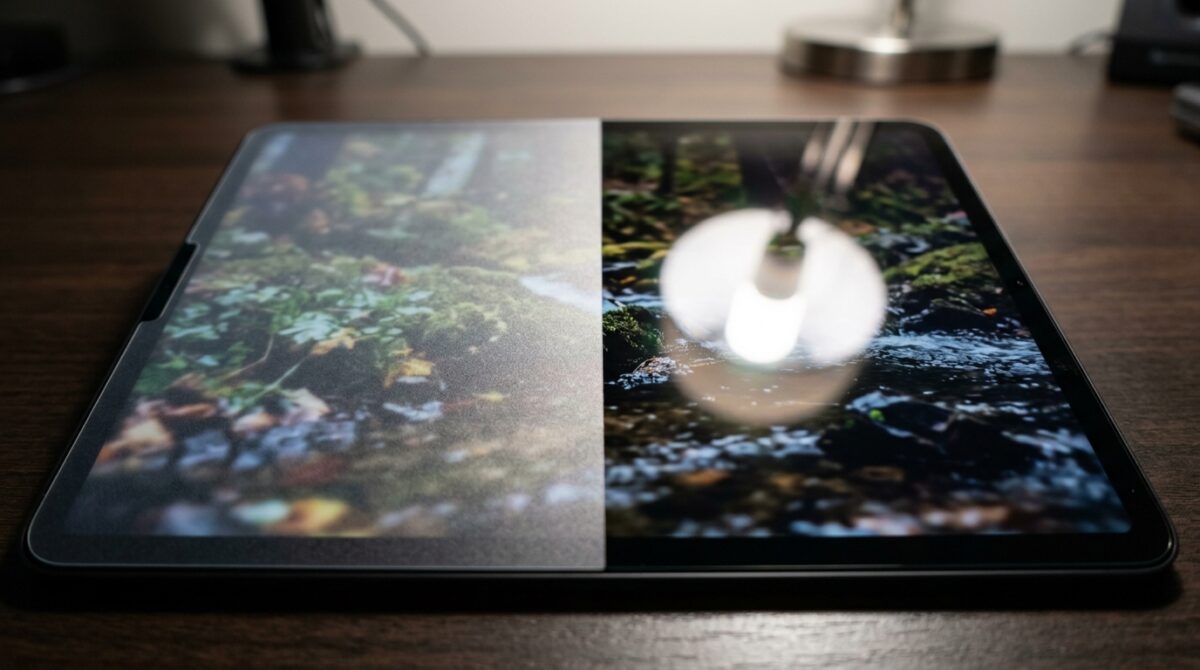
Matte Screen Protectors vs Glossy Displays: The Trade-off Between Glare Reduction and Color Accuracy in Photo Editing
Considering that picture editing calls for a high level of visual accuracy, display quality is one of the most significant considerations for creative professionals such as photographers, designers, and others in the creative industry. The degree to which a screen properly depicts the original picture is a factor that influences every modification that involves brightness, contrast, color balance, and detail. There are various display concerns, but surface smoothness is one of the most important factors that affects the editing experience. When it comes to regulating light reflection and visual clarity, matte screen protectors and glossy screens are two distinct techniques that provide various solutions. While glossy displays are recognized for having a higher contrast, deeper blacks, and more colorful picture presentation, matte surfaces are meant to decrease glare and increase vision in bright conditions. Matte surfaces allow for better visibility in bright surroundings. It is crucial for anybody who wants consistent color fidelity while also preserving pleasant viewing circumstances during extended editing sessions to have a solid understanding of the distinctions between these technologies.
An Analysis of the Effects of Screen Surface Finish on Image Viewing
For a display, the surface coating is what governs how light from the outside world interacts with the screen. Glossy displays have a clean reflecting surface that enables more light from the panel itself to reach the observer. This results in pictures that are more crisp and have a greater apparent contrast. There is a reduction in the amount of reflections that are created by windows, lights, and overhead illumination when matte surfaces are employed because they use tiny texture or diffusion layers to disperse incoming light. The same diffusing effect may somewhat affect the way light from the display enters the eyes of the viewer, despite the fact that this increases vision in bright situations. These surface qualities have the potential to impact the overall editing experience, which is important in picture editing because of the minor color and detail alterations that are involved.
The Reasons Behind the Success of Glossy Displays Among Creators
The fact that glossy screens often provide a viewing experience that is more vivid and colorful has contributed to their rise in popularity among creative workers and photographic experts. The display panel’s light is able to flow through the surface with minimum dispersion thanks to the smooth surface, which results in details that are more distinct and contrast that is more intense. When opposed to matte surfaces, colors may tend to seem more saturated, and dark regions often appear to have a deeper appearance. Glossy screens have the potential to deliver a good depiction of pictures especially when used for photo editing in controlled situations with adequate lighting. The fact that this kind of surface enables experts to perceive small details and tonal transitions with more visual impact is one of the reasons why they favor it.
This is the primary benefit that matte screen protectors provide.
The primary purpose of matte screen protectors is to lessen the amount of reflections that occur and to enhance the level of comfort in difficult lighting circumstances. When working in close proximity to windows, strong office lights, or outdoor locales, photographers and editors often face the challenge of dealing with distracting reflections on glossy displays. It is simpler to see the material without having to continually alter viewing angles when the surface is matte since it diffuses the light that is coming in. It is possible that this may alleviate eye strain and increase productivity over extended periods of editing. Glare reduction may give a greater practical advantage to users who are working in settings that are not under their control than the optimum visual clarity that glossy displays provide.
The Influence That Matte Surfaces Have On The Accuracy Of Color
The most significant disadvantage of matte screen protectors is the possibility that they may have an impact on the visual quality. It is possible for matte coatings to somewhat diminish the apparent sharpness and contrast of an image because they scatter light. If the display is the same as it would be without the matte coating, the fine details may look less distinct, and the colors may appear less vibrant. When it comes to professional picture editing, even minute variations in terms of perceived contrast or color may have a significant impact on editing choices. In the event that the screen surface alters the way in which the picture is visually perceived, a photographer who is changing shadows, highlights, or saturation may experience an error in compensation.
Enhanced Color Perception Through the Use of Glossy Displays
It is common for glossy displays to provide enhanced color perception. This is because the light from the panel is able to reach the observer in a more direct manner. Because of this, gradients, textures, and tiny visual features are more accurately represented than they would otherwise be. Because of the enhanced clarity, it may be simpler to assess minor alterations when editing images with a high resolution. Glossy surfaces have a tendency to keep the features that are meant to be preserved by current display technologies, particularly panels that are built for expansive color gamuts and content with a high dynamic range. Nevertheless, these benefits are highly dependent on accurate calibration and being able to maintain regulated viewing conditions.
Taking into Account the Lighting Environment
When editing photographs, the surroundings plays a significant role in determining whether matte or glossy surfaces are more appropriate. Glamourous displays are able to function to their full potential when they are in an editing studio that is properly managed and with balanced lighting. This is because reflections are reduced. In contrast, a home office that has a lot of reflections, strong ceiling lights, or unexpected sunshine may make it impossible to utilize a glossy screen in a comfortable manner. When faced with these circumstances, matte surfaces become more desirable because they are able to preserve visibility despite the constraints posed by the environment. Thus, the same display may generate distinct experiences depending on the context in which it is used and the manner in which it is used.
Calibration of the Screen and Differences in Screen Surface
When it comes to editing photos accurately, display calibration is very necessary, regardless of the screen finish. In certain cases, the results that a correctly calibrated matte display can provide are superior to those that an uncalibrated glossy display can produce. The brightness, color temperature, gamma, and color output of a picture may be adjusted using calibration tools to ensure that the image takes on a more accurate representation of its intended look. On the other hand, surface qualities continue to have an impact on how users perceive the calibrated illustration. When compared to glossy panels, matte coatings have the potential to somewhat alter the perceived contrast, while glossy screens may disclose greater visual depth. In order to develop a dependable editing process, professionals need to take into consideration both the quality of the calibration and the behavior of the surface.
Relaxation of the Eyes During Prolonged Editing Sessions
Long periods of picture editing need not just precision but also comfort in order to be successful. It is possible for reflections and glare to produce visual fatigue because they need the eyes to continually shift between the picture on the display and the light sources that are around it. By reducing the number of distracting reflections, matte protectors help to alleviate this issue, which in turn may make working for long periods of time more pleasant. It is possible that glossy screens will produce a more visually attractive picture, but they may become exhausting in conditions that are not well managed. For those who spend a significant amount of time editing, the optimal surface is one that strikes a compromise between providing correct picture assessment and maintaining a comfortable viewing experience.
Making a Decision Between Matte and Glossy Effects When Editing Photos
Whether you choose matte screen protectors or glossy screens is dependent on the priorities you have and the settings under which you operate. When it comes to controlled editing situations, glossy displays are a good choice since they often provide higher visual clarity, stronger contrast, and more brilliant color presentation. Matte protectors provide a considerable decrease in glare and an improvement in comfort in environments that are often bright or unexpected; nonetheless, they may somewhat diminish the perceived sharpness and color intensity of the image. A well-calibrated glossy display is often the most reliable source of visual reference when it comes to professional picture editing, which places the utmost importance on color fidelity. Photography professionals who often operate in a variety of lighting settings may find that a matte solution provides a more realistic balance between the ease of use and the accuracy of their work. By having an understanding of this trade-off, developers are able to choose a display configuration that allows for both technical accuracy and pleasant editing over an extended period of time.