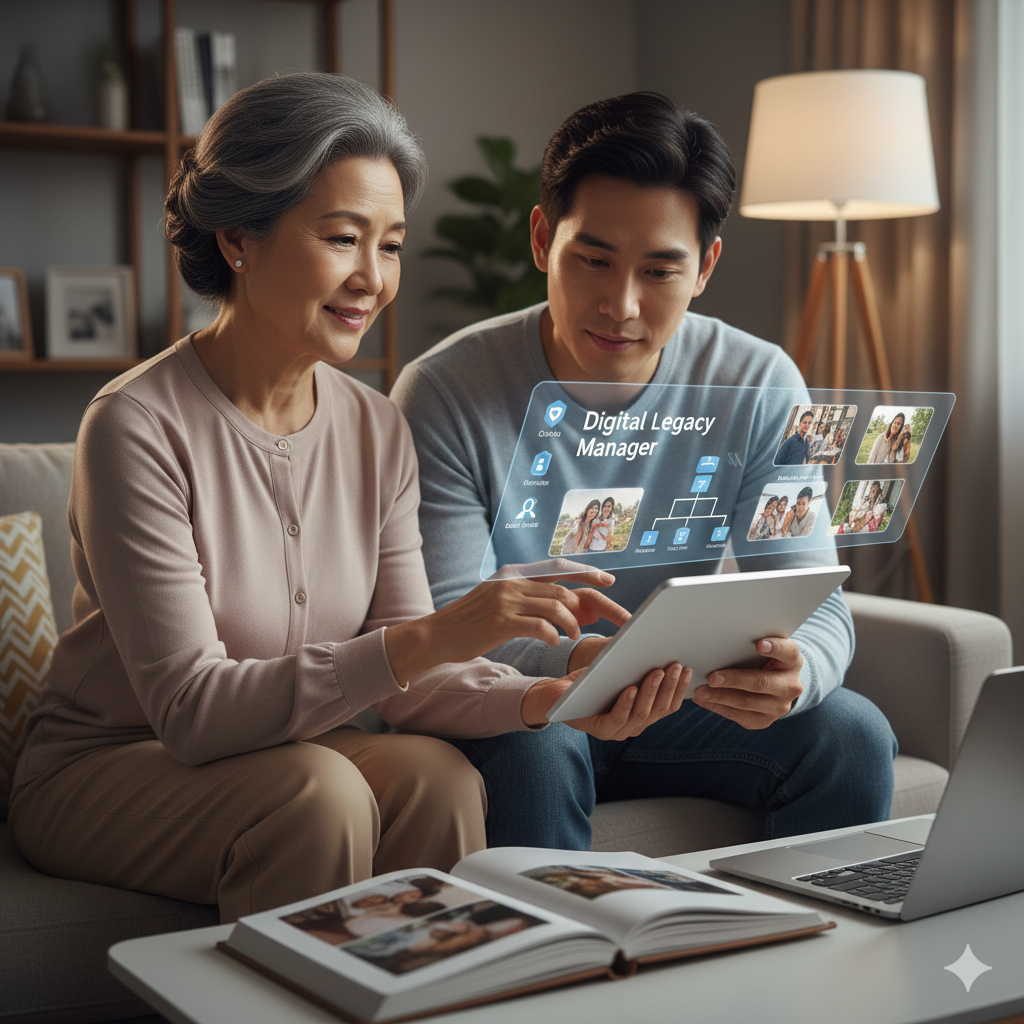
Managing Your “Digital Legacy”: How to Ensure Your Cloud Photos and Accounts Are Accessible to Family
In the year 2026, our digital lives, which include cloud storage, social media, and subscription accounts, constitute a major amount of our personal memories and possessions. When you manage your digital legacy, you guarantee that subsequent generations of your family will be able to access critical accounts, documents, and photographs even when you are no longer able to do so. Protections like as passwords, two-factor authentication, and cloud security measures might prohibit loved ones from accessing stuff that is important to them if proactive preparation is not implemented. You are able to leave behind a digital footprint that protects memories, legal papers, and other important data if you use a strategy that is well-structured and strikes a balance between privacy, security, and accessibility. When you take ownership of your digital estate, you protect not just your personal history but also the practical access that future generations will have to it.
Cloud Accounts and Login Information Organization and Management
To get started, make a list of all the cloud-based services that you use, such as picture storage, email accounts, social media platforms, and subscription platforms. It is important to have a safe place to record usernames, passwords, and possible recovery methods. Password managers that come along with encrypted vaults provide the perfect solution for securely storing and sharing this information with persons who can be relied upon. In addition to preventing the loss of access to essential digital information, keeping login credentials structured helps lessen the amount of uncertainty that others in the family experience.
Creating Trusted Contacts and Legacy Options for Your Organization
Many platforms now have trusted contact or legacy account capabilities, which enable selected others to access or administer accounts after your death. These services are available on many platforms. Enable these options wherever they are accessible, and choose family members or executors who are accountable for the situation. In order to preserve privacy while assuring continuity, it is necessary to define the extent of access, which may include complete control of the account or restricted viewing capabilities. Prioritizing the configuration of legacy choices allows for the avoidance of problems and legal obstacles at times of sensitivity.
Maintaining a Local Backup of Vital Information
The creation of local backups of essential information provides both redundancy and long-term security, despite the fact that cloud storage is considered to be handy. Replicas of films, documents, and photographs may be stored on encrypted USB drives, network-attached storage (NAS) devices, or external drives. Local backups provide protection against the possibility of an account being closed, platform changes, or unintentional deletion. Maintaining these backups with regular updates guarantees that the data is always up to date and can be accessed whenever it is required.
Providing Access to Documentation of Instructions
It is of the utmost importance to provide detailed, written instructions on how to access accounts and material. Incorporate procedures for logging into cloud services, using two-factor authentication, and finding backup disks all into the process. Maintain the instructions in a safe and accessible physical place, such as a legal document folder or a safe, so that all members of the family may access them. Having documentation that is easy to understand allows you to avoid misunderstanding and guarantees that individuals responsible for the management of your digital heritage can easily handle it.
Controlling Personal Information and Sharing Permissions
The maintenance of privacy is still crucial, despite the fact that accessibility is more critical. To identify what members of the family are able to access or alter, it is important to review the sharing options for cloud-based images, documents, and other services. The recovery of memories, media, and practical accounts should be permitted but access to sensitive material should be restricted. A digital legacy that respects your personal limits and the requirements of your family may be created by striking a balance between privacy and accessibility.
Updating and Keeping Access Plans in Good Condition
As a result of the constant evolution of digital platforms and security regulations, it is vital to routinely examine and update your access strategy. Always remember to update your passwords, trusted contacts, and instructions if you make changes to your accounts or add new services. By maintaining the plan at its most recent version, you can guarantee that members of your family will have continued access and avoid the danger of losing valuable material as a result of credentials that have expired or changes to the platform.
Concerns Regarding the Law in Relation to Digital Assets
Due to the fact that some accounts could be subject to legal limits or terms of service, proper documentation is an essential component. When digital assets are included in wills or estate planning documents, it guarantees that the power to administer or inherit accounts is acknowledged. When it comes to incorporating cloud accounts, cryptocurrency, and digital media into estate planning, it is best to seek the advice of legal authorities. Legal directions that are crystal clear limit the likelihood of future disputes and create a framework that is organized to handle digital assets in a responsible manner.
Educating Members of the Family Regarding Access
Last but not least, make sure that members of your family are aware of the steps involved in obtaining your digital testament. If it is acceptable, walk them through the process of backing up their data, using password managers, and using cloud services. When people are experiencing emotional or stressful moments, familiarity helps to reduce delays and misunderstanding. By combining secure documentation, legal clarity, and education for the family, it is possible to maintain your digital legacy in a manner that is both responsible and safe, while also minimizing the amount of friction experienced by those who need access.