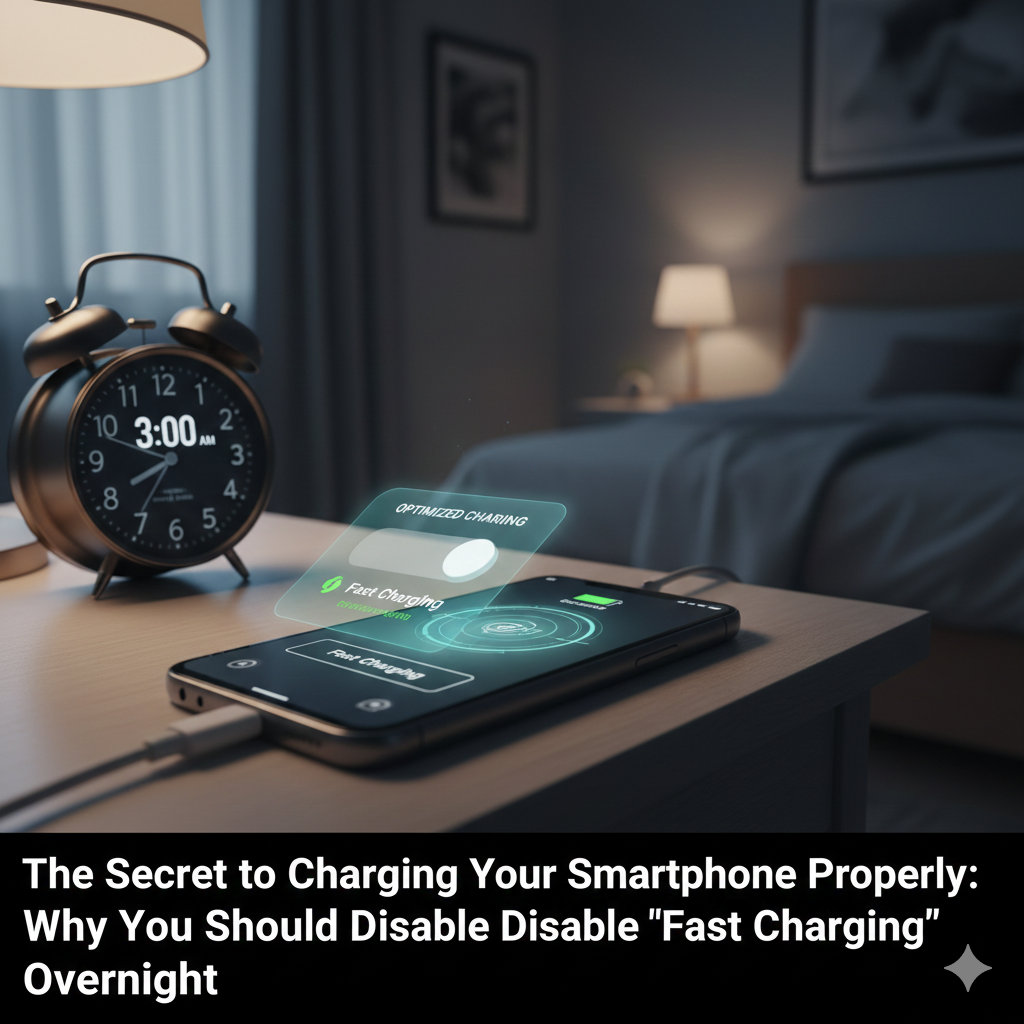
The Secret to Charging Your Smartphone Properly: Why You Should Disable “Fast Charging” Overnight
In 2026, smartphones are more powerful than they have ever been, often enabling artificial intelligence processing, high-refresh screens, and 5G connection. However, the lifespan of their batteries is still dependent on charging practices that are done correctly. Although “fast charging” is relied on by a large number of users to swiftly recharge their smartphones, leaving this function enabled overnight might hasten the pace at which the battery wears out. A large current is sent to the battery during rapid charging, which results in the production of heat and an increase in the chemical stress placed on lithium-ion cells. Over extended periods of time, this may lead to a decrease in overall capability, a reduction in lifetime, and even moderate edema in extraordinary circumstances. Maintaining the health of your smartphone while ensuring that it is still available for use in the morning requires that you have a solid understanding of how to control rapid charging and when to deactivate it.
In what ways does rapid charging impact lithium-ion batteries?
The process of fast charging involves injecting a heavy current into the battery in order to achieve a considerable charge percentage in a short amount of time. This approach generates heat and raises the internal resistance of the battery, particularly when the battery is already close to reaching its maximum capacity. However, it is ideal for giving the battery a brief boost throughout the day. A battery that is charged overnight maintains a higher voltage for a period of several hours while being subjected to stress, which speeds up the process of chemical breakdown. The battery’s long-term efficiency and lifetime are both reduced when it is subjected to high current and heat on a regular basis since this reduces the number of effective charge cycles on the battery.
One of the advantages of turning off fast charging at night
The battery is able to charge at a slower and more gentle pace when rapid charging is turned off for nighttime usage. This results in the generation of less heat and reduces the amount of stress that is placed on the cells. In addition to preserving the chemical integrity of the battery, slow charging also guarantees a cooler charging environment and has the potential to keep the battery’s capacity close to its maximum for many years. A large number of contemporary smartphones provide users with the ability to plan slow or “optimized” charging, which automatically completes the charge closer to the time that you wake up. This reduces the amount of time that the battery is left idle at maximum power and extends the battery’s lifespan.
Constantly Keeping the Battery at the Ideal Temperature
The most significant threat that lithium-ion batteries face is heat. It is possible for even little temperature rises to hasten the wear process during overnight charging. When the phone is covered or put under a pillow, which naturally retains warmth, the heat created during the latter stages of charging is reduced when rapid charging is off. This is particularly true while the phone is being charged. The temperature control of your device may be further improved by placing it on a surface that is both flat and properly ventilated while it is being charged. This, in conjunction with gradual charging, will enhance both safety and the life of the battery.
Utilization of Features for Battery Management
The majority of today’s smartphones come equipped with built-in battery optimization technologies that automatically manage voltage and monitor charge cycles. Some electronic gadgets include features such as “Optimized Battery Charging” that restrict the pace at which the battery can be charged overnight and prevent it from remaining at 100% for lengthy periods of time. By using these characteristics in conjunction with deactivating rapid charging, dual protection is provided. Slower current decreases heat, and timed charging prevents extended exposure to high voltage. Both of these features are essential for ensuring that the battery continues to function at its top level.
Fast charging throughout the day should be avoided if it is not essential.
While charging overnight is advantageous since it results in slower rates, rapid charging during the day may still be helpful for providing quick top-ups. On the other hand, if the battery is misused, repeated full-speed charging during brief periods may aggravate the stress on the battery. Maintaining the health of a battery over the long term requires striking a balance between rapid charging and slower charging cycles on occasion. The life of the battery may also be supported by paying attention to the temperature of the battery and avoiding high ambient heat while it is being charged.
Specific Charging Procedures Suggested for Longevity purposes
If you want your smartphone to last as long as possible, during normal usage, you should try to keep it between 20% and 80% charged, and you should avoid keeping it plugged in for lengthy periods of time when it is fully charged. It is possible to decrease chemical deterioration by, among other things, turning off rapid charging overnight, making use of charging features that have been improved, and keeping the surroundings cool. As time passes, these procedures help to conserve the capacity of the battery, keep the performance consistent, and reduce the likelihood of the battery experiencing unexpected aging or early failure.
Advice That Is Useful in Every Circumstance
In order to properly adopt these habits, you should arrange charging around your daily routine, make use of the slow charging or battery optimization modes on the device, and keep an eye on the temperature during lengthy sessions. When charging your smartphone, you should avoid charging it beneath cushions or in confined locations. If your smartphone does not have built-in scheduling, you may consider utilizing smart plugs or timers to govern charging cycles. Through the regular use of these tactics, you can safeguard your battery while ensuring that your device is always available for use throughout the day, without compromising on either its convenience or its performance.